Ecumenical Patriarchate
Archdiocese of Thyateira and Great Britain
The Orthodox Church of St. Cosmas & St. Damian
Ipswich Suffolk


British and Irish Saints
(Including saints having a connection with these lands)
"When the Church in the British Isles begins to venerate her own saints, then the Church there will grow" – St Arsenios of Paros. (1877)
SEPTEMBER

1st St Drihthelm, Hermit at Melrose (c 700).
He is mentioned by St Bede as having had a vision of the afterlife, including heaven and hell, during a few hours of apparently having died. He recovered but was so shaken by his vision that, after making provision for his wife and family, he withdrew to the monastery at Melrose to live a harsh ascetic existence in the hope of being saved.

3rd St MacNis, Abbot of Kells (c 514).
Some 40 miles north-west of Dublin, Kells is most famous for the Gospel book called The Book of Kells, written in the 9th century. St MacNis was baptized by St Patrick and instructed by him. He later founded a monastery at Connor, not far from Kells; later, he founded the Monastery of Kells as a place to which to withdraw. Subsequently, Kells became much more famous than Connor.

6th St Bega (Bee), First Abbess of Copeland in Cumbria (7th).
Born in Ireland, Bega fled to England to avoid marriage and first settled as a hermit on the Cumbrian coast, founding St Bee’s Priory at Copeland, near the Cumbrian coast. Fearful of attacks by pirates, she moved to Northumbria. She was widely venerated in medieval times, and miracles were attributed to her. At Bassenthwaite in Cumbria, a church is dedicated to St Bega, and there is an Orthodox community there dedicated to St Bega, St Mungo, and St Herbert of Derwentwater.

8th King Ina of Wessex and Queen Ethelburga (8th).
King Ina and Queen Ethelburga were devout Christians, and the King was an able and wise ruler. He codified laws for his kingdom which Alfred the Great included in his laws. Ina made peace where he could with other rulers and overcame those who resisted his efforts at peace. Trade flourished, and the kingdom was prosperous. Ina did much to support the Church. Queen Ethelburga supported him in his works. In 726, Ina abdicated and he and Ethelburga went to Rome where they passed the remainder of their lives.

9th St Kieran (Ciarán in Irish) of Clonmacnoise (c 545).
One of the ‘Twelve Apostles of Ireland’, Kieran is one of the most popular saints of Ireland, and his name (in either form) is a very popular boy’s name. In 544, following the advice of St Enda of Aran, he settled at Clonmacnoise and founded the monastery there. It grew in size and became one of the most important centres of spiritual life and of learning in Ireland. The remains of the monastery are substantial.

10th St Finian of Ulster, Abbot (579).
Known as ‘of Ulster’ to distinguish him from an earlier Finian. He was ordained in Rome and then returned to Ireland. In 540, he founded the Monastery of Movilla in Co Down, Northern Ireland. The monastery was an important centre of spirituality and learning until its dissolution by the English king, Henry VIII.

11th St Deiniol, Abbot of Bangor, and Bishop in Clwyd (c 584).
He founded a monastery at Bangor in North Wales. At the height of its fame, it is said to have numbered more than two thousand monks. Deiniol was the outstanding Bishop of North Wales and is believed to have been one of the two Bishops sent to persuade David to attend the Synod of Brefi. Bangor Cathedral, built on the site of the monastery, is dedicated to him.

16th St Ninian, Bishop of Whithorn (Candida Casa) (Galloway c 432).
Called ‘Apostle to the southern Picts’ (in south-west Scotland), Ninian is mentioned briefly by St Bede. He built a monastic college at Whithorn, where he also built the first stone church in Britain, Candida Casa, the White House, dedicated to St Martin of Tours. In later life this ‘holy and reverend man’ retreated to a cell, away from the monastery, which was no more than a fissure in the mountain. After his repose it became a place of pilgrimage.

16th St Edith of Wilton, Nun (984).
Born in Kent in 961, Edith was brought, as a child, by her mother to the convent at Wilton, and was tonsured a nun at 15. Edith always observed strict fasting and abstinence, combining a life of prayer with a life of activity. She fed and clothed the hungry and strangers and tended the sick. She was known for her wisdom, her physical and spiritual beauty, and her angelic voice, and was loved by many for her generosity and compassion for animals. She died aged 23.

19th St Theodore of Tarsus, Archbishop of Canterbury (690).
One of the great figures in the history of the Orthodox Church in England. Born in 602 in Tarsus, the home city also of Apostle Paul, Theodore studied in Constantinople and Antioch and was fluent in both Greek and Latin. He moved to Rome and lived a quiet spiritual life until he was appointed by Pope Vitalian on 26 March 668 as Archbishop of Canterbury. Though already 66 years old, Theodore journeyed to England and was extremely active in organizing the Church here. The heresy of Monothelitism was raging in the East whilst the West largely opposed it. Theodore summoned the English bishops to a synod at Hertford to see if any of them were Monothelites – none were, and Theodore was satisfied that the English were fully Orthodox. Theodore was active in his post until he departed this life on 19 September 690.

23rd St Adomnan, Abbot of Iona (704).
Born in Drumhome, Donegal, where he also became a monk. Later he travelled to Iona, becoming its ninth Abbot in 679. He travelled widely in England and adopted the Roman Calendar for Easter, which he persuaded many of the Irish similarly to adopt. He attended the Council of Birr, which defined the position of women and children in war. This became known as Adomnan’s Law. He wrote the celebrated Life of St Columba, and De Locis Sanctis, a description of sacred sites in the Holy Land.

25th St Finbar (Barry), Bishop of Cork (c 633).
Son of an artisan named Amergin and a lady of the Irish royal court, Finbar was educated at Kilmacahil monastery, Kilkenny, Ireland. He had very light hair, which led to the nickname Fionnbharr, ‘white hair’. He made many pilgrimages to Rome and visited St David of Wales on one trip. He preached throughout southern Ireland, and possibly in Scotland. He later became a hermit on a small island at Lough Eiroe and at Gougane Barra, but later founded a school at Eirce, and a monastery on the River Lee which developed into the city of Cork, of which he became first Bishop.

25th St Ceolfrid, Abbot of Jarrow (716).
Ceolfrid was a Saxon Northumbrian noble. He became a monk at Gilling, North Yorkshire, then at Ripon where he served as cook. Ordained at the age of 27 at Ripon, five years later he was invited by Benedict Biscop to join the new community at Wearmouth where he soon became Prior. In 682 Coelfrid became the Abbot of the second monastery at Jarrow. He and a young single student, St Bede, were the only survivors in this house during a regional plague outbreak. He died on the way to Rome.

28th St Lioba of Wimborne (Abbess of Bischofsheim) (c 780).
Born in Wessex, she became a nun at Wimborne whilst still young. Her relative, St Boniface, wrote to the Abbess in 748 asking for assistance for his mission in Germany. A group of 30 nuns was sent, including St Lioba, who became Abbess of Bischofsheim, Mainz, which she ruled for 28 years. She founded many other convents in Germany.

30th St Honorius, Archbishop of Canterbury (653).
He was a Roman who was chosen by the Pope to join St Theodore and St Hadrian in their mission to England. In 627, Honorius was consecrated as archbishop by Paulinus of York at Lincoln. Honorius asked the Pope to raise York to an archbishopric, and, agreeing, the Pope sent the pallium to York. Honorius was especially concerned with East Anglia and sent St Felix to do mission work there, which was very successful. Felixstowe is named for him, ‘stowe’ being an old English name meaning, ‘holy place’. Paulinus was the fifth archbishop of Canterbury from St Augustine. On his death, he was buried at Canterbury.
OCTOBER

7th St Dubtach, Bishop of Armagh (513).
He was the ninth successor to St Patrick as Archbishop of Armagh. Little is known of him.

7th Martyr Princess Osyth of Chich (c 700).
Our very own local saint! She was born in Quarrendon in Buckinghamshire. Her father was Frithwald, a Mercian sub-king of Surrey, and her mother was Wilburga, daughter of King Penda of Mercia. Osyth was educated by her two aunts, Modwin and Edith at Polesworth, Bicester or Aylesbury. Osyth wanted to be a nun, but to please her father, she married Sighere, King of Essex. Eventually, Sighere agreed to a separation, and he gave her land at Chich on which to found a monastery. She was abbess and the monastery had a very high reputation. Osyth and her sister nuns were killed during a Danish raid. Later, Chich changed its name to St Osyth.

10th St Paulinus, Bishop of York (644).
A Roman monk, Paulinus was part of the Gregorian mission to England. He was the first Bishop of York. He later tried to evangelise Northumberland, and still later was Bishop of Rochester. He baptised King Edwin of Northumbria (12th October).

11th St Ethelburga, Abbess of Barking (c 676).
She was the sister of St Erkenwald, Bishop of London. She was a natural leader and became the first Abbess of the great Benedictine Abbey at Barking in Essex. She is especially noted for her heroic conduct in caring for the sick during an outbreak of the plague in 664 which eventually killed her and most of her community.

11th St Kenneth (Cainnech in Irish), Abbot of Aghaboe (7th).
Kenneth is a very popular saint in Ireland, and Kenneth is a very common male name, in Scotland as well as in Ireland. St Kenneth is noted as the founder of several monasteries, including Aghaboe in Co Laois.

12th St Edwin, King and Martyr (633).
Edwin was a notable king of northern England in the earlier part of the seventh century. He converted to the Christian faith and was baptised by St Paulinus of York. He did all in his power to spread the Christian faith. He was killed in battle in 633.

12th St Wilfrid, Archbishop of York (709).
A great - and controversial – saint, Wilfrid founded the Abbey at Ripon in Yorkshire with fine stonework, using skilled men he had brought from France. He directly influenced the move away from Celtic to the more orderly Roman church practices. He is best known for championing and winning the case for the Roman method of calculating the date of Easter at the famous Synod of Whitby in 664. He was Bishop of York, and established monasteries in Northumbria, Mercia, Sussex and on the Isle of Wight. He converted Sussex, the last vestige of paganism, to Christianity.

17th Martyrs Ethelred and Ethelbert, Princes of Kent (c 640).
Princes of the royal house of Kent, they are not mentioned by Bede. The Anglo-Saxon Chronicle records their death in 640, but not their names. They were the sons of Ermenred and great-grandsons of Ethelbert King of Kent. Their cousin Egbert's counsellor, Thunor, murdered the princes and buried them at Eastry. Egbert was held responsible, and in expiation founded the monastery at Minster-in-Thanet, where Ermenburga, their sister was the first Abbess. Their bodies were translated to Wakering (Essex) and later to Ramsey Abbey by Oswald of Worcester.

19th St Frideswide (pronounced ‘Fritheswith’) of Oxford, Abbess (c 735).
Frideswide was an English princess and abbess. She is credited as the foundress and first abbess of a monastery later incorporated into Christ Church, Oxford. She was the daughter of a sub-king of Mercia named Dida of Eynsham, whose lands occupied western Oxfordshire and the upper reaches of the River Thames. Accounts of her life are filled with miracles. Her monastery was taken by Cardinal Wolsey in 1525 and he established a new college in its grounds. St Frideswide’s tomb was destroyed in the Reformation but rebuilt in recent times.

20th St Acca, Bishop of Hexham (c 740).
During his youth, Acca joined the household of Bishop Bosa of York, where he fell in with the Romanist party and became a faithful friend of St Wilfrid, Abbot of Ripon. They were constant companions for thirteen, often turbulent, years and Acca accompanied Wilfrid on many of his Continental visits. Wilfred nominated Acca to succeed him as Abbot of Hexham and, in the event, he was able to take up the Bishopric as well. He completed the building work started by his friend and decorated the principal church at Hexham with altars, sacred vessels and holy relics. Acca was an accomplished singer and a noted scholar of the age. Bede praised the high quality and wide-ranging diversity of his theological library; and dedicated several of his biblical works to the Bishop. The two seem to have known each other well, for when Acca found St Ambrose's commentary on St Luke too long, he encouraged Bede to write a reduced version. He later supplied Bede with information for the Ecclesiastical History.

22nd St Donatus of Ireland, Bishop of Fiesole (c 876).
This saint was born, brought up, and educated in Ireland. He was renowned for his learning, and became a priest, then a bishop, and a great teacher. In time, he resolved to go to Rome with one companion. At Fiesole, the people begged him to stay and become their bishop. He resisted at first but then submitted to their will. He did much to promote the veneration of St Brigid of Kildare.

26th St Eata, Bishop of Hexham and Abbot of Lindisfarne (686).
He was one of twelve English youths whom St Aidan educated at Lindisfarne, where Eata became a monk and a priest. At the request of St Colman, he became the abbot. He was later Abbot of Melrose and founded the monastery at Ripon in Yorkshire, which he left rather than abandon Celtic customs. After the Synod of Whitby, Eata, whom Bede describes as a man of peace, adopted Roman customs, and when Theodore of Canterbury divided the see of York into three bishoprics, he chose Eata to be the bishop of Bernicia. Eata served in this office from 678- 681. Theodore later split Bernicia into the sees of Lindisfarne and Hexham, and appointed Eata to Lindisfarne and Cuthbert to Hexham. The two men then exchanged sees. Eata was the bishop of Hexham for a year before he died. He was buried near Wilfrid's church in Hexham.

31st St Aristobulus of the Seventy (1st).
This is a secondary feast of St Aristobulus, the main feast being 15th March. He was a Cypriot and brother of St Barnabus. He worked with St Paul and St Andrew, but was the founder of the Church in Britain, having been sent here by St Paul. It was not easy to convert the peoples here, but he had some success, and the faith took deep root here. Unfortunately, little is known about his time here, but he laboured and died here, and we must keep in mind that the Church was established in England as early as the middle of the first century and the Church here is thus of the earliest, and of apostolic foundation.
NOVEMBER
.jpg)
1st St Cadfan of Bardsey (6th).
He founded a monastery at Towyn, near Aberdovey in Wales which existed until the thirteenth century. Water from Cadfan’s holy well reputedly cured rheumatism and skin disorders, with a small spa existing there into the nineteenth century. He later founded a monastery at Bardsey.
.jpg)
3rd St Winifred (Winifride) of Treffynon (Holywell)
(N Wales 7th).
She was abbess of a monastery in Wales. She is a well-known and popular saint, especially in Wales, mainly on account of St Winifred’s Well which is in the centre of the town of Holywell in the far north-eastern corner of Wales. The well is thought to be from early pagan times, but became associated with St Winifred. It is a national shrine and has been a place of pilgrimage for Christians for more than 900 years.
.jpg)
6th St Illtyd, Abbot of Llanilltyd Fawr (6th).
Little is known of this saint. He was said to be a great teacher, having established a monastic school for children and clergy at Llanilltyd Fawr which is a village on the extreme south coast of Wales. The school was a cradle of Celtic Christianity.
.jpg)
10th St Aedh (MacBricc), Bishop of Meath (6th).
Not a well-known saint even in Ireland, but he laboured in Co Donegal, and was noted as a spiritual guide to women, and as being sympathetic to young women who had fallen into sin.

10th St Justus, Archbishop of Canterbury (627).
First, he was Bishop of Rochester, and then was fourth Archbishop of Canterbury. Noted as an assistant to St Augustine in the evangelisation of the English. What we know about him is in St Bede’s Ecclesiastical History.
.jpg)
11th St Martin the Merciful, Bishop of Tours (397).
Though a saint of France, St Martin has always been much venerated in England. Indeed, St Martin’s Church in Canterbury is the oldest active church in England, dating from before 597. St Martin-in-the Fields in London is a very famous church whose origins date from Roman times. The Antiochian Orthodox Church in Colchester, Essex, is dedicated to St Martin, the dedication dating from very early times. The story of St Martin, a Roman army officer, giving a beggar half his military cloak is well known and much depicted in art. He was the third Bishop of Tours.
.jpg)
12th St Machar, Bishop of Aberdeen (6th).
This saint was of Irish origin, and was baptised by St Colman. He went to Iona with St Columba, and then went to preach to the Picts in eastern Scotland, becoming, one source says, the first Bishop of Aberdeen. Nothing else is known about him for certain.
.jpg)
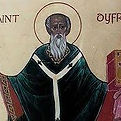
14th St Dyfrig, Bishop in Hereford and Gwent, Hermit of Bardsey Island (c 550).
He was born in Herefordshire and is associated with south-east Wales. As a child he was noted for his intellect, and by the time he was a man he was known as a scholar throughout Britain. He founded a college in Herefordshire to which many scholars, including St Illtud, came. Dyfrig later moved further up the Wye to found an abbey. While he was abbot he was chosen to be the first Bishop of Llandaff. He laboured long and hard against the Pelagian heresy. He retired to live as a hermit on Bardsey Island.
.jpg)
17th St Hilda of Whitby, Abbess (680).
One of the great saints of England and the greatest of our women saints. The University of Oxford has a college named after her. Most of what we know about St Hilda is from Bede who praises her very highly. She became a nun at the age of 33, and intended to join her sister at a monastery in France, but St Aidan asked her to return to Northumberland. After being abbess of the monastery at Hartlepool, she founded the monastery at Whitby. Like many monasteries in England in those times, this was a double monastery with communities of monks and of nuns. (We may think of the double monastery at Tolleshunt Knights.) Bede praises Hilda for implementing a monastic regime that required strict observance of ‘justice, piety, chastity’ and ‘particularly of peace and charity’. In her monastery, ‘no one there was rich, and none poor, for they had all things common’. Hilda was a woman of great energy, who was a skilled administrator and teacher. As a landowner she had many in her employ to care for sheep and cattle, for farming and woodcutting. She gained such a reputation for wisdom that kings and princes sought her advice. However, she also had concern for ordinary folk such as Caedmon. He was a herder at the monastery, who was inspired in a dream to sing verses in praise of God. Hilda recognized his gift and encouraged him to develop it. Bede writes, ‘All who knew her called her mother because of her outstanding devotion and grace.’ Such was the prestige of the monastery that it was chosen to host the Synod of Whitby in 664. Hilda suffered from illness during the last seven years of her life.
.jpg)
18th St Mawes, Bishop in Cornwall and Brittany (5th).
The origins of St Mawes are uncertain save that he was a Celt. He started his mission in the settlement in Cornwall named after him. He is thought to have been a bishop there. However, he later crossed to Brittany with which he is mostly associated.
_reverse.jpg)
19th St Egbert, Archbishop of York (766).
Egbert, cousin of King Ceolwulf of Northumbria, to whom Bede dedicated his history, succeeded Wilfrid II as Bishop of Northumbria in 732. He became the second Archbishop of York. Egbert stepped at once into a commanding position and every bishop in the northern province was made his suffragan. Egbert was a stern disciplinarian and it was soon after his consecration to the see that Bede addressed to him his well-known letter, setting forth the disorder and corruption of the whole northern diocese. Evils which, throughout his episcopate, Egbert sought by every means to reform. He was probably the first to introduce the parochial system in the north and was certainly the founder of the famous monastic school of York and of the library connected with it. In this school, Alcuin was educated.
.jpg)
20th St Edmund, King and Martyr (869).
Edmund was king of East Anglia from about 855 until his death. Few historical facts about Edmund are known since the kingdom of East Anglia was devastated by the Vikings who destroyed any contemporary evidence of his reign. His relics were at the cathedral of Bury St Edmunds, and veneration of St Edmund began soon after his martyrdom by the Vikings. He became England’s patron saint until he was replaced by St George in the 15th century.
.jpg)
22nd Hieromartyr Deiniol the Younger, Abbot of Bangor (621).
The origins of St Mawes are uncertain save that he was a Celt. He started his mission in the settlement in Cornwall named after him. He is thought to have been a bishop there. However, he later crossed to Brittany with which he is mostly associated.
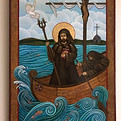
23rd St Columbanus of Ireland, Abbot of Luxeuil & Bobbio (615).
Born in Ireland and as a young man noted for both his academic ability and his good looks. Whilst in his youth, he met an anchoress who encouraged him to embrace the religious life. He left the district travelling to Comgall’s austere monastery in Bangor where he remained for a considerable time, studying theology, Latin and Greek. He later travelled to Gaul and established monasteries living according to Irish monastic observances. One of these, Luxeuil, was built in a Roman ruin, a hill fort. Within a short time, followers spread all over Europe, and churches and monasteries were established in France, Germany, Italy and Switzerland. He and his monks established a monastery at Bobbio, between Milan and Genoa, noted for its teaching and spirituality.
_edited.jpg)
24th St Colmán, Bishop of Cloyne (c 606).
He was a monk, founder and patron of Cluain Uama, now Cloyne, County Cork, Ireland, and one of the earliest known Irish poets. He was a native of Cork and for many years the royal bard of Cashel. He was converted to Christianity by St Brendan of Clonfert.
.jpg)
24th St Enfleda, wife of St Oswy, King of Northumbria (c 704).
Enfleda was the queen of the pious King Oswiu of Northumbria who died in 670. She was a supporter of the Roman cause at the Synod of Whitby, and was a patron of St Wilfrid. The widowed Enfleda retired to the monastery at Whitby where her daughter Elfreda was also a novice. She succeeded St Hilda as abbess.
_edited_edited.jpg)
29th St Brendan of Birr (573).
He was a friend of Columba and also a contemporary of Brendan the Voyager. He was known as the ‘Chief of the Prophets of Ireland,’ and after his death, Columba, many miles away on Iona, was granted a vision of his soul being received by the angels.

30th St Tudwal, Bishop in Wales and Brittany (6th).
Tudwal was a Welsh monk and bishop. Originally a monk in Wales, he journeyed Ireland for his education. Then, he spent time as hermit on what is now called St Tudwal’s Island off the coast of the Llŷn Peninsula in North Wales. He later went to Brittany, France, with his mother, sisters, and other relatives. The Celtic language of Brittany was easily understood by Welsh speakers. Tuwal was thus one of several Celtic saints who evangelised Brittany.
DECEMBER

3rd St Birinus, Bishop of Dorchester (649-50).
He was the first Bishop of Dorchester, and is known as the Apostle to the West Saxons, having been appointed such by Pope Honorius I. Birinus converted the Wessex king, Cynegils, who gave Dorchester to Birinus as his episcopal see. He was responsible for founding a church at Winchester, which later became the ecclesiastical centre of the kingdom. He established churches in Wessex, and several churches around the west of England are dedicated to him.

5th Martyr Justinian, hermit of Ramsey (6th).
A Welshman, Justinian is listed on very ancient Welsh calendars of saints and martyrs. He led a strict ascetic life on the island of Ramsey, which impressed St David, who asked him to be abbot of a monastery on the mainland. His regime, though, was too severe for some of the monks, and he retired back to Ramsey with just a few monks. It is said that his monks became so weary of his extreme severity that they killed him.

12th St Finnian, Bishop of Clonard, Ireland (c 549).
Born in the west of Ireland, St Finnian studied locally, and later, in Wales. On returning to Ireland in 520 he settled at Clonard, which is just west of Belfast. Finnian had a great reputation for his knowledge of the Scriptures and Clonard became a centre of biblical studies. He is known as the teacher of the saints and one of ‘the twelve apostles of Ireland’. His ‘Penitential’ survives and is a manual for both clergy and laity which addresses the means of overcoming various sins.

12th St Colman of Glendalough, Ireland (659)
Glendalough was founded by St Kevin. St Colman succeeded St Kevin as abbot in about 618. Glendalough grew under Colman's leadership into a renowned centre of learning, prayer, and pilgrimage. As an abbot, Colman diligently maintained the spiritual discipline of his monastic community, ensuring its continued growth and influence throughout Ireland. It is said that he possessed a deep devotion to solitude, spending much of his time in remote caves and hermitages, seeking a closer union with God. He played a vital role in the early spread and development of Christianity in Ireland.

12th St Edburga, Abbess of Minster (751).
Minster, named after Minster Abbey, is in Kent. This monastery for nuns was founded in 670. Remarkably, it is still used as a monastery, being home to a community of Benedictine nuns. St Edburga was a princess, the daughter of the King and Queen of Wessex. She entered the monastery in 716 and became abbess in 733 when there were some seventy sisters. She was a skilled scribe, and corresponded with notable figures of her time, but little else is known about her.

14th St Hybald, Abbot in Lincolnshire (7th).
He is a much-loved saint in the county of Lincolnshire. In his youth, he was probably a monk in Lindisfarne, where he got to know St Egbert, the future abbot of Iona. At some time, he visited Egbert in Ireland. Then, in about 660 he returned to England, perhaps with St. Chad. For it was in the diocese of St Chad that St Hybald became abbot of a monastery in Lindsey (Lincolnshire), in what is now Hibaldstow. The Venerable Bede says that he was a very holy and abstinent man. In the nineteenth century, the vicar of the church of St Hybald in Hibaldstow found the remains of a very tall and powerful man in a stone coffin. It is thought that these were the relics of St Hybald. The stone coffin with the relics has now been reburied under the floor of the church on the south side of the chancel. Late in the 1990s, the Orthodox community in that area was holding a service in the church to commemorate St Hybald when it was noticed that a fragrance was issuing from the south wall just under the window. The vicar agreed that an icon of St Hybald, and a vigil lamp, should be placed and kept on the window sill.

18th St Winnibald, Abbot and Missionary (761).
He made a pilgrimage to Rome with his brothers and stayed there seven years in order to study. Some time later, along with a number of companions, he joined St Boniface to work in Thuringia and Bavaria. Later, he and his brother, Willibald (Bishop of Eichstatt) founded the only double monastery in Germany at Heidenheim. The monastery itself became an important centre for evangelism. After his death at Heidenheim, his sister took on the administration of the monastery.

30th St Egwin, Bishop of Worcester (717).
Born in Worcester of a noble family, he became a monk and was later appointed to the see of Worcester in 693. He was known as a protector of widows and orphans and was a fair judge. In particular, he is remembered as the founder of Evesham Abbey. The Abbey was built to commemorate a vision of the Virgin Mary, seen by a shepherd, Eof. In that vision she made known exactly where the church should be built. Later, St Egwin himself had a vision of the Virgin Mary.